The Panhandle Nordic Club is committed to creating a safe and enjoyable experience for every Nordic skier and snowshoer. Through shared trail awareness, respect for fellow outdoor enthusiasts, and responsible practices, we can protect one another and preserve the beauty of the winter landscapes we love to explore.
Your Safety is Paramount
Panhandle Nordic Club prioritizes safety in all Nordic activities and ski tours. Learn more about how you can participate responsibly.
Being responsible for your own safety supports a safe tour for others. Gain the confidence you need to become an active member.
Nordic Safety
-
Panhandle Nordic Club prioritizes safety in all Nordic activities and ski tours. Participants are responsible for choosing trips suited to their abilities, traveling thoughtfully, improving skills, and continually assessing navigation and snow safety. Trip descriptions, maps, and reports on this site are not intended for independent travel, as backcountry routes may be unmarked and un-patrolled.
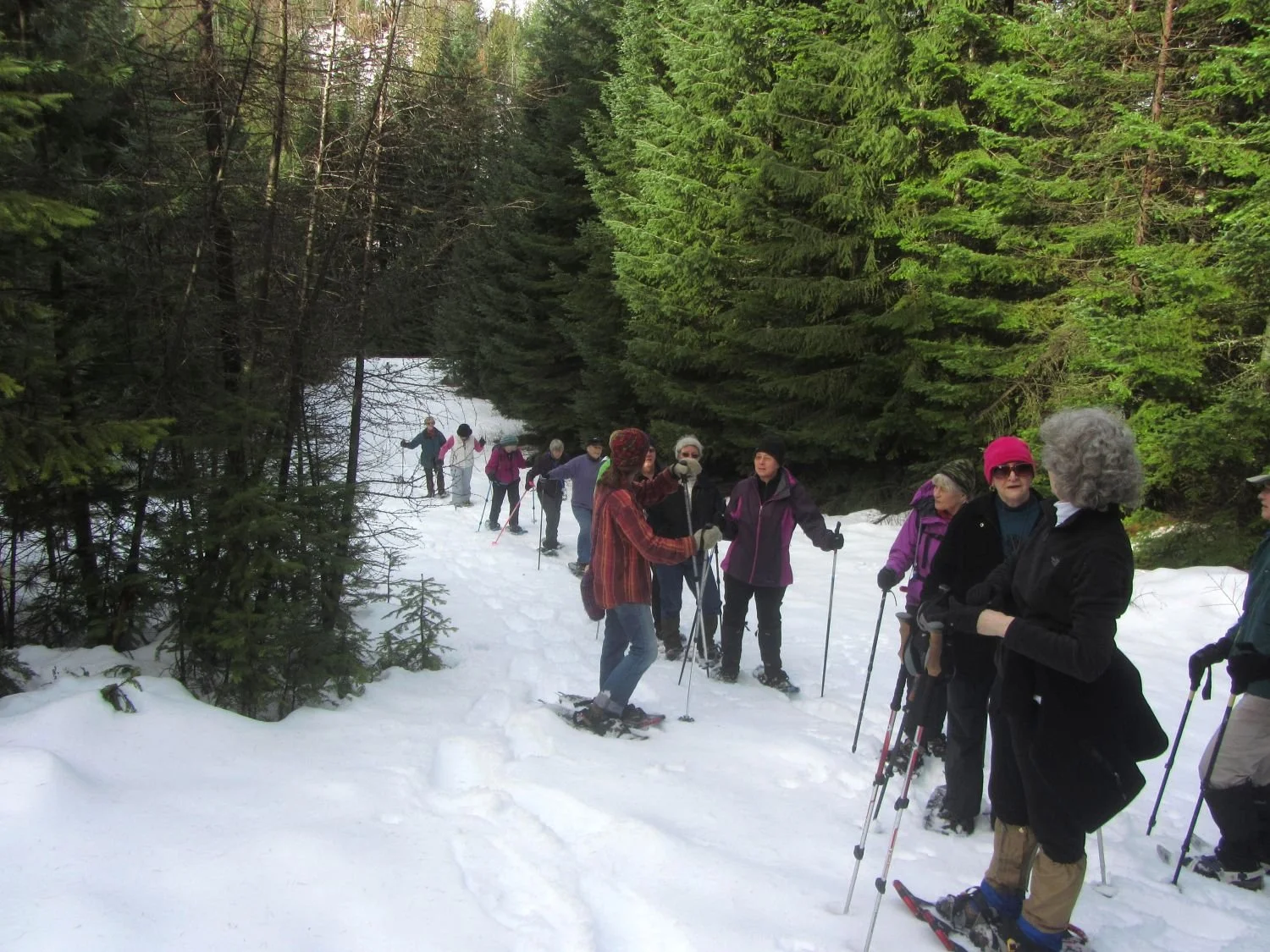
Do not go alone; winter navigation can be difficult, and touring with experienced leaders who know local terrain and conditions is strongly advised.
Do not set out on a long tour without training and select trips that match your skill level.
Tell someone where you intend to go.
Listen to experienced mountain folks.
Respect the weather and weather reports and prepare for winter driving.
Be prepared for stormy weather even on short tours.
Bring a well-packed rucksack: extra clothing, flashlight or headlamp, water, food and emergency items (matches, fire starter, space blanket, first aid kit) are good choices. Carry an avalanche beacon where needed.
Bring a map and compass and/or GPS unit. Monitor snow, weather and stamina during your tour.
Turn back in time; most tragedies occur because this rule was disregarded.
-
Select tours and activities that align with your current skill and comfort level—attempting trips beyond your ability can create risks for yourself and others. If you’re unsure, contact the trip leader in advance to discuss skills and equipment.
Panhandle Nordic Club tours vary in distance and difficulty. Skill levels applied to touring are as follows:
A – Easy: Basic skills; mostly level terrain; a few miles.
B – Intermediate: Entry-level backcountry; 10+ miles; moderate hills; elevation gain 1,000+ feet.
C – Advanced: Increased elevation, steep terrain, and longer time on skis.
D – Expert: Challenging backcountry and high-terrain routes with significant distance and technical demands.
Trip leaders may adjust the level, destination, or cancel a trip if conditions require. Your safety and enjoyment are our priority.
-
The goal of proper Nordic ski clothing is to remain comfortable—not too cold and not too hot— in a winter environment while both exercising and resting. Unlike downhill skiing, Nordic skiing and snowshoeing are high-energy activities, so clothing must adapt to changing exertion levels and weather conditions. The following principles should guide every clothing choice:
Key Considerations
Thermal insulation – preserves body warmth
Moisture control – allows perspiration to escape while keeping melting snow and rain out
Wind barrier – protects against wind chill
Clothing Fabrics: What to Wear (and What Not to Wear)
Choose wool or synthetic fabrics, especially next to the skin. These materials wick moisture away from your body and dry quickly. Wool, in particular, continues to insulate even when wet.
Avoid cotton at all costs, especially as a base layer or mid (insulating) layer. Cotton absorbs moisture and promotes evaporative cooling, which can rapidly chill your body in winter conditions and increase the risk of hypothermia.
Core Protection: Layering System
Using a layering system for both the upper and lower body allows you to regulate body temperature as conditions and exertion levels change.
Base Layer
Worn next to the skin
Insulates lightly while transporting moisture away from the body
Should be snug but not restrictive
Middle (Insulation) Layer
Traps warm air to provide thermal insulation
Often fleece, wool, or lightweight synthetic insulation
Can be added or removed as conditions change
Outer Layer
Protects against wind, snow, and moisture
Should be breathable to allow sweat to escape
Soft-shell or lightweight shell layers are often ideal for Nordic skiing
Extremity Protection
Head
A significant amount of body heat is lost through the head.
Wear a cap or hat made of wool or synthetic material
Look for options with thermal and wind-blocking properties
Consider lighter hats for high-energy skiing and warmer hats for rest stops
Hands
Use lightweight cross-country ski gloves rather than heavily insulated downhill/alpine gloves
Mittens provide greater warmth by keeping fingers together
Always carry an extra pair of gloves, as hands can get wet from snow or sweat
Feet and Socks
Wear a thin liner sock paired with a medium-weight wool or synthetic sock
This combination improves moisture management and reduces friction
Use gaiters in deep snow to keep snow out of boots
Footwear: Skiing vs. Snowshoeing
Cross-Country Ski Boots
Designed to work with Nordic ski bindings
Insulated yet breathable to manage moisture during high activity
Should fit snugly but allow toe movement for warmth
Waterproof or water-resistant materials are essential
Snowshoe Footwear
Waterproof winter boots or insulated hiking boots are recommended
Boots should provide good ankle support and traction
Ensure boots are compatible with snowshoe bindings and not overly bulky
Warm, waterproof footwear is especially important, as snowshoeing often involves slower movement and more time standing still
Eye Protection
Dark, wrap-around sunglasses are recommended to protect eyes from intense sunlight reflected off snow
Snow glare can cause eye strain, headaches, and even snow blindness
Alpine or downhill ski goggles are generally not appropriate for Nordic skiing, as the higher exertion level often causes fogging
Anti-fog solution on sunglasses can be very helpful
Backpack Essentials
A backpack allows you to adjust to changing conditions and carry essential safety gear.
Choose a pack that:
Has a low center of gravity matching your body’s natural balance
Offers stable support and does not swing while skiing
Transfers weight to the hips rather than the shoulders
Carry critical gear for backcountry skiing and snowshoeing:
Extra clothing layers to replace wet items or add warmth during rest stops
Gloves, hats, or socks as backups
Food, water, and any personal essentials
Learn From Experience
Our members have a great deal of experience and are always happy to share knowledge, tips, and firsthand advice to help you stay comfortable, safe, and confident while learning to enjoy Nordic skiing and snowshoeing.
TRAIL ETIQUETTE
To keep our trails safe, enjoyable, and well-maintained for everyone, please follow these simple courtesies:
If you remove your skis, walk along the far outside edge of the trail to avoid damaging the groomed track.
Stay to the right on two-way trails.
When stopping for any reason, move to the right side of the trail.
When passing others, offer a friendly heads-up or say “track” so slower skiers can step aside safely.
Yield to downhill skiers, who may have less control and limited visibility.
Follow the direction of posted arrows — during night skiing, all lit trails are one-way only.
Respect trail closures.
Please use designated snowshoe trails only. Walking on ski trails—even along the edges—creates uneven surfaces that are difficult and potentially unsafe for groomers to navigate.
For everyone’s safety, please do not snowshoe beyond the warming hut on Fourth of July trail network.
Pack it in, pack it out — please help keep the trails clean.
Dogs are only allowed on the Fourth of July Pass designated Snowshoe and Multi-use Trails (see map of the area).
Be mindful that grooming equipment, maintenance crews, and Ski Patrol may be present on the trails at any time. If you see snowmachine tracks it is considered groomed!
Thank you for doing your part to create a safe and welcoming experience for everyone who enjoys our winter trails!